
A student who regularly leaves class is often described as “noncompliant.” A teacher may be told to reinforce expectations more consistently. Yet the student may be responding to sensory overload, an inaccessible task, a missed instruction, anxiety, or a need for connection. The right response is not a generic behavior plan. It is a schoolwide capacity to ask better questions and act on the answers. That is where special education consultation for schools can make a meaningful difference.
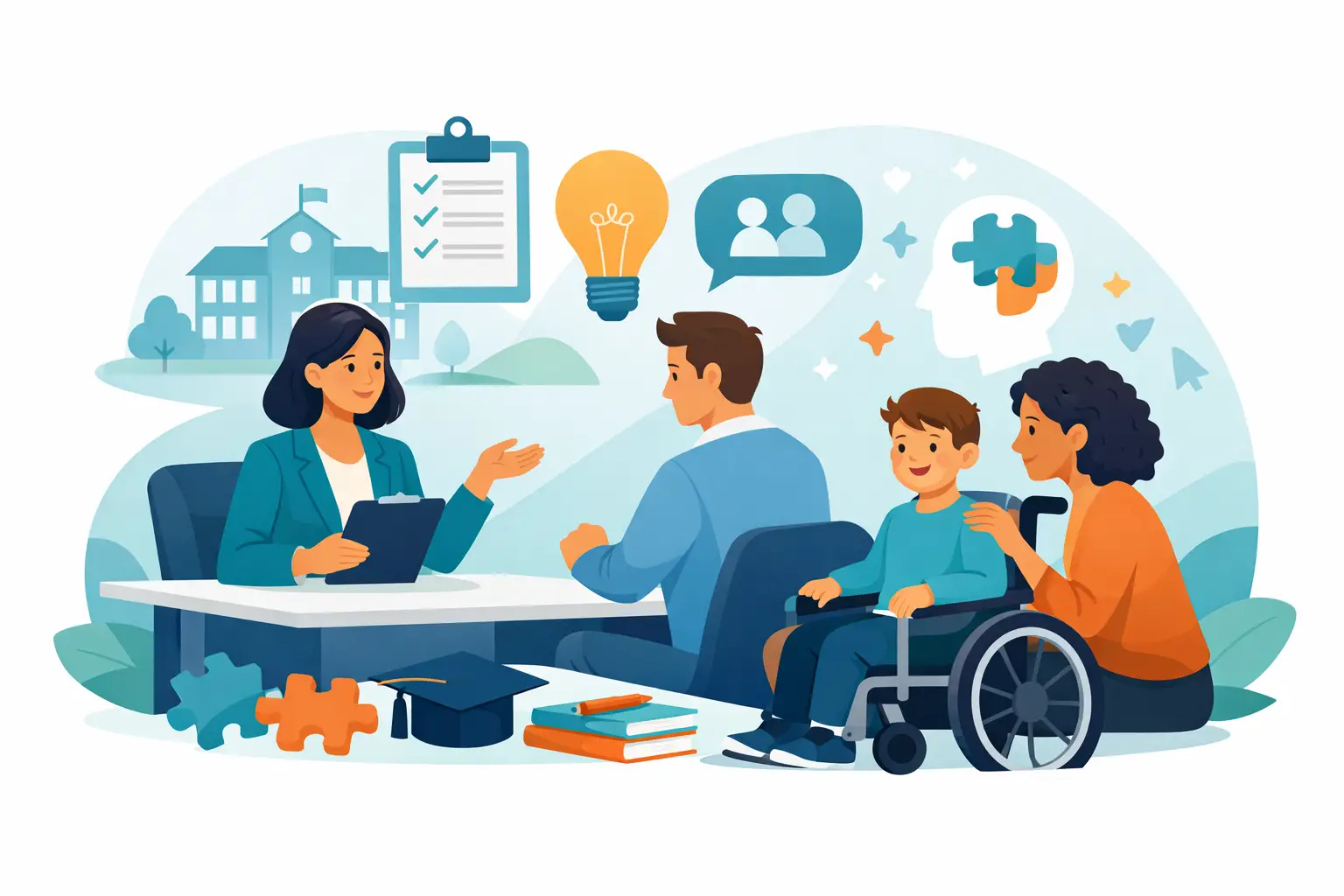
Consultation gives education teams focused support in turning inclusive values into daily practice. Rather than treating a student’s needs as a problem for one specialist to solve, effective consultation helps teachers, support staff, leaders, and families create conditions in which students can participate, communicate, learn, and belong.
What Special Education Consultation for Schools Provides
School consultation is a collaborative service designed around a school’s real context: its students, staffing, routines, culture, resources, and goals. A consultant may work with a leadership team on inclusion systems, coach teachers through classroom barriers, guide learning-support teams in developing interventions, or help staff respond more effectively to social-emotional and behavioral needs.
The purpose is not to hand a school a binder of recommendations that sits unused. Strong consultation builds practical capability. Teams leave with clearer next steps, usable tools, and a shared language for supporting diverse learners.
This work can be valuable across many situations. A school may need support when referrals to special education are rising, when teachers feel unsure about accommodations, or when inclusion is inconsistent between classrooms. Another school may be strengthening family partnerships, reviewing behavior practices, supporting students affected by trauma, or preparing staff to serve a more neurodiverse student population.
The focus depends on the school. The common thread is a commitment to reducing barriers rather than lowering expectations.
Consultation Starts With the School’s Actual Challenges
A meaningful consultation process begins with listening. Before recommending strategies, an experienced specialist needs to understand what is happening across the school day and how staff, students, and families experience it.
This may include conversations with educators and school leaders, a review of existing support processes, classroom observations, and consideration of relevant student data. Data matters, but numbers alone cannot explain why a student is struggling or why an intervention has not worked. Attendance patterns, academic progress, behavior referrals, student voice, family feedback, and classroom observations each offer part of the picture.
For example, a team may notice that several students with identified learning needs are underperforming in writing. The immediate assumption might be that students need more remediation. Consultation may reveal a different issue: writing assignments rely heavily on executive functioning, teachers use inconsistent scaffolds, and students do not have enough choices in how they demonstrate understanding. In that case, the solution includes targeted instruction, but it also includes more accessible task design and teacher support.
This distinction matters. When schools respond only after students fall behind, support can become reactive. Consultation helps teams identify patterns earlier and develop environments where more learners can succeed from the start.
From Recommendations to Classroom Practice
Research-based guidance has value only when educators can use it on a busy Tuesday morning. The most effective consultants translate evidence into strategies that fit the grade level, subject area, staffing model, and available time.
A consultation plan might help teachers clarify learning goals, offer multiple ways for students to engage with content, and use accommodations without isolating students from their peers. It may support staff in creating predictable routines, teaching self-regulation explicitly, or using restorative and trauma-informed responses when a student is distressed.
Practical changes are often modest at first. A visual agenda can reduce uncertainty. A chunked assignment can make a complex task more manageable. A planned movement break can prevent escalation. A brief check-in with a trusted adult can strengthen a student’s readiness to learn. These supports should never be applied as one-size-fits-all solutions, but they can become powerful when selected thoughtfully and monitored over time.
Consultation also helps teams distinguish between equality and equity. Giving every student the same materials, directions, or assessment format may appear fair, but it does not always provide meaningful access. Equity means offering the supports, flexibility, and challenge each learner needs to participate fully.
Building Consistency Without Losing Professional Judgment
Students benefit when expectations and support approaches are consistent across classrooms. At the same time, educators need room to respond to their students and teaching contexts. Consultation should not create rigid scripts that ignore professional expertise.
A balanced approach establishes shared practices – such as a common process for documenting accommodations, responding to concerns, or communicating with families – while allowing teachers to adapt instruction. The goal is coherence, not compliance for its own sake.
Strengthening Team Collaboration and Family Partnership
Supporting students with special educational needs is never the responsibility of one person. Classroom teachers, special educators, counselors, paraprofessionals, administrators, related service providers, and families each hold valuable knowledge. Yet collaboration can break down when roles are unclear or communication happens only in moments of crisis.
Consultation can create more purposeful structures for teamwork. Teams may clarify who is responsible for implementing supports, how progress will be reviewed, and when adjustments should be made. They can also learn to frame student needs in strengths-based language that recognizes competence, identity, and potential.
Family partnership deserves the same care. Families are experts on their children, and their insight can help schools understand what supports work beyond the classroom. At the same time, families may have experienced meetings where they felt unheard, overwhelmed, or blamed. A consultant can help staff prepare for collaborative conversations that are respectful, clear, and centered on shared goals.
This does not mean every family will agree with every school decision. Honest differences can arise around services, behavior responses, academic expectations, or communication preferences. What matters is that the school approaches those differences with transparency, empathy, and a commitment to the student’s dignity.
When Professional Development Is Part of the Answer
Sometimes a school needs consultation around a specific student or system. Other times, the greater need is broad staff learning. These approaches work best together when consultation identifies the skills educators need and professional development provides structured practice.
A one-time workshop can introduce useful ideas, but lasting change usually requires follow-up. Teachers need opportunities to apply strategies, ask questions, reflect on what happened, and refine their approach. Coaching, peer collaboration, and leadership support make implementation far more likely to continue after the training ends.
Topics may include inclusive lesson design, neurodiversity-affirming practice, behavior support, trauma-informed education, accommodations, learning-support planning, or family collaboration. The right topic is not simply the most popular one. It should address a demonstrated need and connect to the school’s priorities.
For teams seeking deeper specialization, accredited learning can also strengthen individual confidence and leadership. The Sen Institute supports education professionals with practical, research-based learning that helps them advocate for inclusive practice and respond more effectively to diverse learner needs.
Choosing a Consultation Partner
A school should look for more than an impressive list of credentials. Expertise matters, especially in special education, but so does the ability to listen, communicate clearly, and make evidence-based practice usable.
A strong consultation partner will ask about the school’s goals before proposing solutions. They will recognize that legal requirements, local policies, and available resources shape what is possible. They will avoid promising instant transformation and instead help the team set realistic, measurable priorities.
Schools should also ask how success will be evaluated. Useful indicators might include staff confidence, implementation of agreed practices, student participation, family feedback, reductions in exclusionary responses, or progress toward individualized goals. No single measure tells the whole story, so review should combine data with the lived experiences of students and staff.
Most importantly, consultation should reinforce the school’s own capacity. Outside expertise can provide direction and momentum, but sustainable inclusion happens when educators feel equipped to make thoughtful decisions long after the consultation concludes.
Every student deserves to encounter adults who see more than a label, a behavior, or a score. When schools invest in informed, compassionate support, they create more opportunities for students to be known, challenged, and included as full members of their learning community.