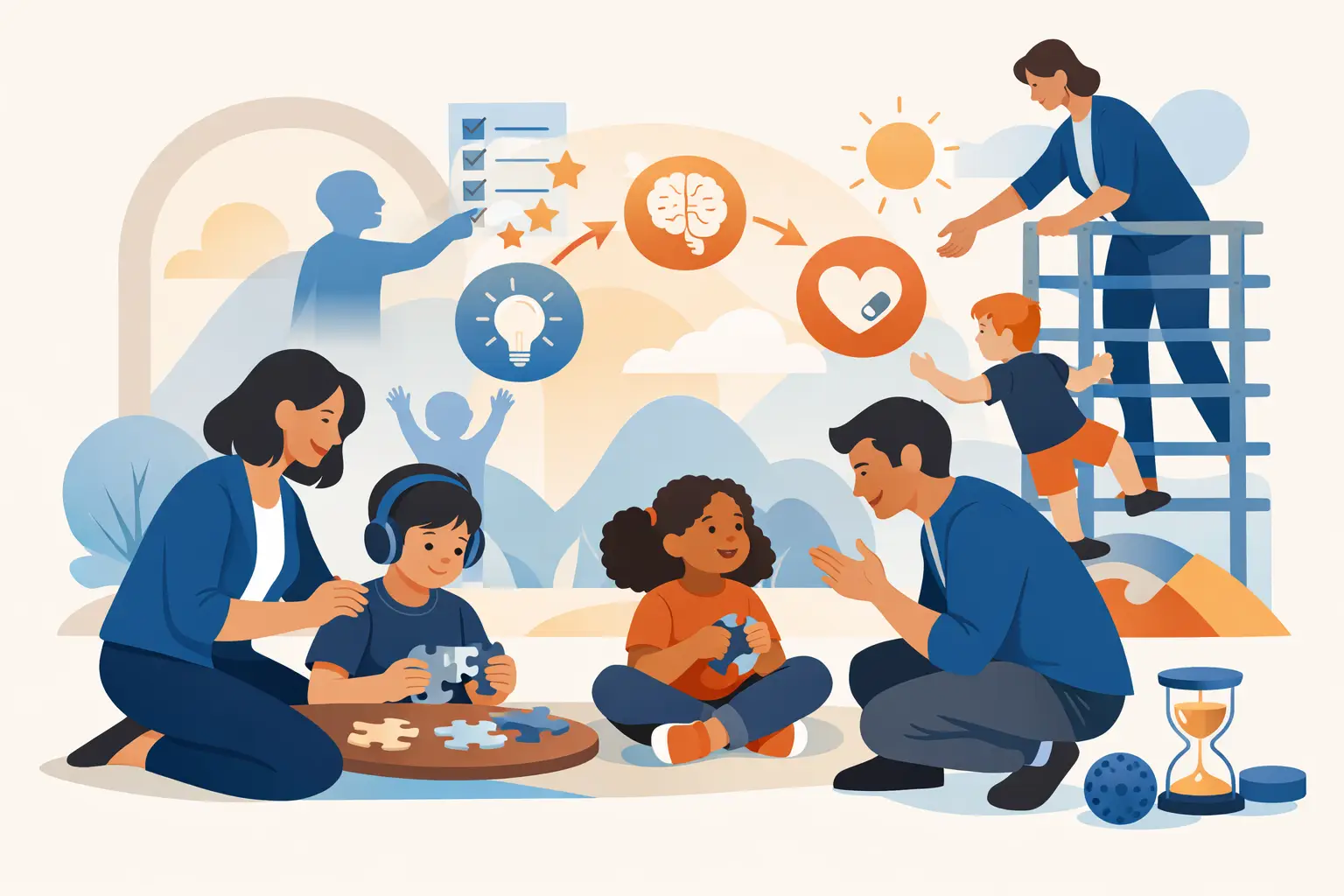
A student pushes away a worksheet, leaves their seat, or goes silent after a routine change. The immediate question is often, “How do I stop this behavior?” More useful behavior support strategies for neurodivergent students begin with a different question: “What is this student communicating, and what support would make participation possible?”
Behavior is not separate from learning. It is shaped by sensory input, communication demands, executive-function load, relationships, fatigue, stress, trauma history, and the accessibility of the task itself. When educators respond with curiosity and practical structure rather than assumptions, they can protect student dignity while building the skills needed for meaningful participation.
Start With Function, Not Labels
A behavior may look similar across students while serving very different purposes. A learner who avoids writing may be overwhelmed by fine-motor demands, unsure how to begin, worried about making a mistake, or seeking relief from a noisy environment. A student who calls out may be excited, may need help waiting, or may not yet have a reliable way to enter a group conversation.
This is why broad labels such as “defiant,” “attention-seeking,” or “unmotivated” rarely lead to effective intervention. They can obscure the conditions that make a behavior more likely. A functional, strengths-based lens asks what happens before the behavior, what the student gains or avoids afterward, and which skills or environmental supports are missing.
Brief, objective observation can reveal useful patterns. Note the setting, task, time of day, people present, sensory conditions, and adult response. Describe what can be seen and heard rather than assigning intent. “Jordan put their head down and did not begin independent writing for eight minutes” provides far more actionable information than “Jordan refused to work.”
The goal is not to excuse harmful behavior or lower expectations. It is to identify a realistic path toward safer, more sustainable behavior. Expectations still matter, but students need accessible ways to meet them.
Build Predictability Before a Problem Occurs
Many behavior challenges become less intense when the school day is easier to anticipate. Predictability reduces the working-memory demands of constantly figuring out what comes next, particularly for students who experience anxiety, ADHD, autism, language-processing differences, or difficulty with transitions.
A visual schedule, a short written agenda, or a consistent opening routine can make expectations visible. These supports work best when they are actively taught, referenced, and updated, not simply posted on a wall. If an assembly, substitute teacher, schedule change, or fire drill is coming, prepare students early and explain what will remain the same.
Transitions deserve particular attention. Instead of offering a vague warning, name the next action and make the first step manageable: “In two minutes, close your laptop, place it in your bag, and meet me at the reading table.” Some students benefit from a timer, a transition object, or a choice about the order of two acceptable tasks.
Predictable routines should not become rigid rules that ignore individual needs. For some learners, a visual countdown is calming; for others, it raises anxiety. Ask the student and adjust based on what observation shows.
Make Regulation Part of Classroom Design
Students cannot consistently use self-regulation skills in environments that overwhelm their nervous systems. Regulation support is not a reward for good behavior. It is an access need that helps learners return to a state where they can think, communicate, and engage.
Consider the sensory and emotional demands embedded in ordinary classroom activities. Fluorescent lights, crowded hallways, overlapping conversations, unexpected touch, public correction, and lengthy verbal directions can each increase stress. Small adjustments, such as offering noise-reducing options, reducing visual clutter, providing a quieter workspace, or giving directions in writing and speech, can prevent escalation.
A designated regulation space can be useful when it is framed as a supportive tool rather than a place of exclusion. It might include a clear visual of calming choices, water, drawing materials, movement options, or headphones, depending on school policies and student needs. Students should practice using the space when calm. Sending a distressed child there without instruction or connection can feel punitive and may not help them regulate.
Adults also co-regulate. A calm voice, fewer words, physical space, and a nonthreatening posture often communicate more safety than repeated reminders. During escalation, prioritize safety and reduce demands. Problem-solving can wait until the student has regained enough regulation to participate in it.
Teach the Skill That the Behavior Replaces
If a behavior is serving a function, the student needs an alternative that serves that function more safely and effectively. Telling a student to “make good choices” does not teach the specific action they can take when they are overwhelmed, confused, or frustrated.
For example, a student who tears up difficult work may need a practiced way to request help, ask for a short break, use a graphic organizer, or begin with one item rather than a full page. A student who grabs materials may need direct teaching in how to gain a peer’s attention, request a turn, and tolerate a brief wait. These skills need modeling, rehearsal, prompts, and feedback, just as academic skills do.
Keep replacement behaviors efficient. If it takes less effort to shout than to use a complicated communication card located across the room, the new skill is unlikely to be used in a moment of stress. A simple break card, gesture, or pre-agreed phrase may be a more practical starting point.
Positive feedback should be specific and connected to the skill. “You showed me your break card before the frustration got too big. That helped us make a plan,” reinforces both the action and the student’s growing self-awareness. Avoid praise that feels controlling or overly public, particularly for older students who value privacy and autonomy.
Use Choices Without Removing Necessary Boundaries
Meaningful choices can reduce power struggles and strengthen autonomy. They are most effective when both options are genuinely acceptable to the adult and manageable for the student. A teacher might offer a choice between typing or handwriting, starting independently or beginning with a check-in, or completing five problems now and five after a movement break.
Choice is not the same as allowing a student to avoid every challenging task. Learning often requires supported discomfort, persistence, and repair after mistakes. The balance is to preserve the learning goal while adapting the route. If the goal is demonstrating understanding of a science concept, an oral response, labeled diagram, speech-to-text response, or partner explanation may be more appropriate than a lengthy written paragraph.
Clear, respectful boundaries remain essential when behavior affects safety, learning, or the rights of others. State the boundary plainly, offer the next supportive step, and avoid turning the moment into a public contest. “I cannot let you throw materials. I am moving these items away, and we can use the break area or take a walk with the support staff.” This communicates safety without shame.
Respond to Escalation With Dignity
Escalation is rarely the best time for reasoning, consequences, or a detailed conversation about expectations. A distressed student may have reduced access to language, flexible thinking, and impulse control. Adults can help by lowering their own intensity, simplifying communication, and reducing the audience whenever possible.
After regulation returns, use a brief restorative conversation. Ask what was difficult, what helped, and what could work next time. The student may communicate through speech, visuals, writing, or a trusted adult. Focus on repairing impact and planning support, not extracting an apology on demand.
Consequences that remove access to instruction, relationships, or regulation tools can intensify the very conditions behind the behavior. There are times when safety requires separation or a change in setting. When that occurs, the plan should include how the student will reconnect, regain missed learning, and return without stigma.
Create Consistency Through Collaboration
The strongest behavior plans are not carried by one teacher alone. General educators, special educators, counselors, paraprofessionals, administrators, families, and the student each hold part of the picture. Consistency does not mean every adult uses identical words. It means adults share an understanding of the student’s strengths, triggers, communication preferences, regulation supports, and replacement skills.
Family partnership is especially valuable. Caregivers can identify calming strategies, signs of overload, interests that support connection, and approaches that have not worked. These conversations are most productive when educators lead with strengths and concrete observations rather than a list of concerns.
Professional learning helps teams move from reactive discipline to skilled, inclusive support. Programs such as those offered by The Sen Institute can help educators translate research-based, trauma-informed principles into practical classroom routines, collaborative planning, and confident advocacy for diverse learners.
A student’s hardest moment should not become their defining story. When educators look beneath behavior, teach usable skills, and design environments for regulation and belonging, they create more than a calmer classroom. They create repeated evidence that every learner can be understood, supported, and invited back into the work of learning.