
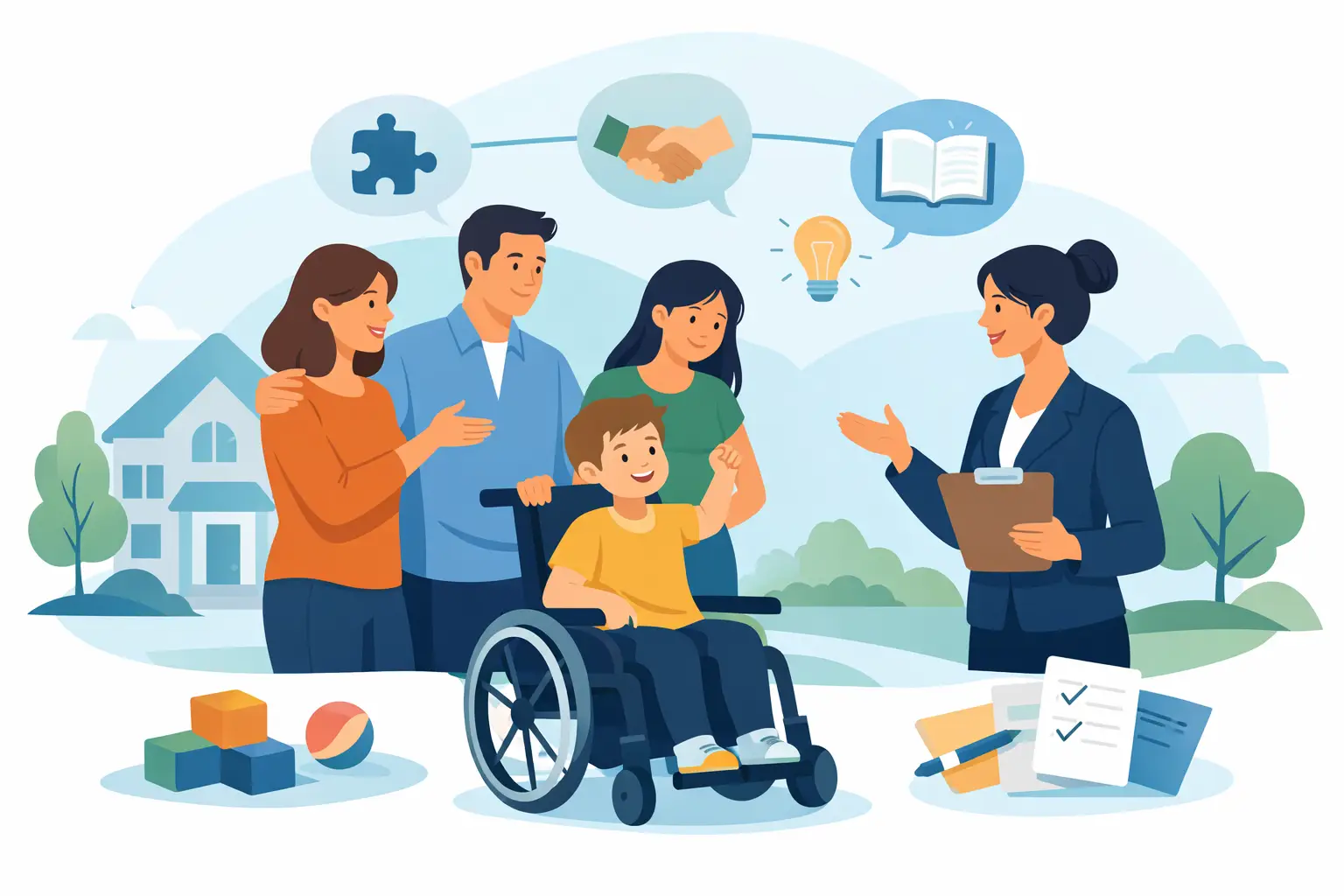
A student may communicate confidently at home yet become quiet in class. Another may manage the school day successfully but arrive home exhausted, dysregulated, or unable to complete homework. Family-school collaboration for special needs helps educators and caregivers see the whole learner rather than making decisions from only one setting.
This work is not an occasional email before an annual meeting. It is an ongoing partnership built around a shared purpose: helping a student participate, learn, communicate, and belong with dignity. When families and school teams combine their knowledge, supports become more relevant, consistent, and responsive to the learner’s strengths.
Why Family-School Collaboration Matters in Special Needs Support
Families hold essential expertise. They understand a child’s interests, communication style, sensory needs, cultural context, routines, and the strategies that help after a difficult moment. Educators bring knowledge of curriculum, peer settings, classroom demands, assessment, and evidence-based instructional practice. Neither perspective is complete on its own.
For students with disabilities, neurodivergent learners, and students experiencing social-emotional or behavioral challenges, gaps between home and school can create unnecessary stress. A behavior plan that works only in one location may not address the reason the behavior occurs. A goal that sounds appropriate in a meeting may not reflect what matters most to the student and family in daily life.
Strong collaboration also supports equity. Families may have had prior experiences of being blamed, dismissed, or overwhelmed by school processes. Some may be navigating language differences, work schedules, transportation barriers, financial pressure, or their own experiences with disability. An inclusive school team does not interpret limited attendance or brief communication as limited commitment. It asks what access and partnership look like for that family.
Start With Strengths, Not Deficits
The language used in a first conversation often determines whether a relationship becomes collaborative or guarded. Beginning with concerns alone can unintentionally position a student as a problem to solve. Beginning with strengths communicates respect and creates a more accurate foundation for planning.
A teacher might share that a student shows remarkable persistence with hands-on tasks, notices details others miss, comforts peers, or has deep knowledge of a preferred topic. Families can then add context: perhaps the student uses visual schedules at home, responds well to humor, or becomes anxious when expectations change without warning.
This does not mean avoiding difficult conversations. It means discussing barriers clearly while separating the learner’s worth from the support they need. Instead of saying, “He refuses to do work,” a team can describe what is observable: “During independent writing, he often puts his head down after the first prompt. We would like to understand what makes that task difficult and test supports together.”
Include the Student’s Perspective
Student voice should be part of the partnership whenever possible. A young child may communicate preferences through choices, behavior, play, or augmentative communication. An older student may identify what helps them focus, what feels overwhelming, and what they want adults to understand.
Student participation will look different depending on age, communication profile, and readiness. Still, even small opportunities matter. Asking, “What helps you feel ready to learn?” or “What would make this goal useful to you?” moves planning closer to self-advocacy and meaningful inclusion.
Build Communication That Families Can Use
More communication is not automatically better communication. Daily updates can help some families, while frequent messages may create anxiety or become impossible for staff to sustain. The right approach depends on the student’s needs, the family’s preferences, and the purpose of the information.
At the beginning of a term or support plan, agree on a practical communication routine. Clarify who will communicate, how often, through which channel, and what kinds of updates will be shared. A brief weekly note may be more useful than scattered messages if it includes one success, one relevant observation, and any upcoming change that may affect the student.
Communication should be understandable without specialized jargon. Terms such as “executive functioning” or “sensory regulation” can be useful when explained, but they should never replace plain language. Families deserve to understand what the team is observing, why a strategy is being suggested, and how progress will be recognized.
It also helps to distinguish between information-sharing and urgent concerns. If a student is unsafe, significantly distressed, or experiencing a major change in support, families need timely contact. Routine communication, however, should not focus only on challenges. Sharing moments of connection, effort, and growth builds trust and gives families a fuller picture of their child’s school experience.
Make Plans Specific Enough to Travel Across Settings
Consistency does not mean expecting home to operate like a classroom or asking educators to replicate every family routine. Home and school have different demands, relationships, and resources. The goal is alignment around a few meaningful strategies, not identical environments.
For example, a team may agree that a student benefits from advance notice before transitions, access to a quiet reset space, and visual choices when language demands are high. At home, that might mean a five-minute warning before dinner. At school, it may mean a visual countdown and a predictable transition role. The format changes, but the underlying support remains recognizable.
Shared plans work best when they answer practical questions. What does the student need before a challenging activity? What signs indicate rising stress? Which adult response is likely to help? What should be avoided? How will the team know whether the strategy is working?
Data can support these conversations, but it should serve the student rather than dominate the relationship. A simple record of when a strategy was used and what happened afterward can reveal patterns. Pair those observations with family insight. A decrease in visible distress at school is encouraging, but a family may notice increased exhaustion at home. Both forms of information matter.
Prepare for Meetings as Collaborative Working Sessions
Individualized Education Program meetings, student support meetings, and problem-solving conferences can feel intimidating for families and professionals alike. Preparation reduces the pressure and creates more room for productive discussion.
Before a meeting, send an accessible agenda and invite family input. Ask what they hope to discuss, what progress they have noticed, and whether they need interpretation, translated materials, virtual access, or another accommodation. Provide reports early enough for families to review them and prepare questions.
During the meeting, avoid treating family input as a final comment after professionals have already decided the plan. Pause throughout the conversation. Check understanding. Explain options and trade-offs honestly. For example, increased pull-out support may provide targeted instruction, while more time in the general education classroom may strengthen peer access and participation. The best decision depends on the student’s goals, support needs, and the quality of inclusive services available.
When disagreement arises, return to shared evidence and shared values. Families and educators may see the same situation differently without either party being uncaring or uninformed. A calm question such as, “What are we each noticing, and what would help us test this idea safely?” can move the conversation from positions to problem-solving.
Create Roles That Do Not Depend on One Person
Collaboration often weakens when one dedicated teacher, case manager, or family member carries all the communication. A sustainable system identifies clear responsibilities across the team. General education teachers, special educators, related service providers, school counselors, administrators, and support staff each need access to relevant strategies and goals.
Respect confidentiality while ensuring that the adults working directly with the student know what they need to know. A substitute teacher may not require a full support history, but they may need a concise plan for communication, transitions, and regulation. Similarly, families should know whom to contact for different questions rather than being passed from one person to another.
Professional learning strengthens this shared responsibility. Teams benefit from practical training in inclusive instruction, trauma-informed support, behavior as communication, family-centered practices, and culturally responsive communication. The Sen Institute emphasizes the value of translating research-based principles into strategies educators can apply in real classrooms and collaborative conversations.
Repair Trust When Communication Breaks Down
Even skilled teams make mistakes. A message may be delayed, a family may feel unheard, or a strategy may not work as intended. Repair begins with accountability, not defensiveness.
Name what happened, listen without interrupting, and identify the next action. A sincere statement such as, “We should have contacted you sooner. I understand why that affected your trust. Here is what we will do differently,” can be more meaningful than a lengthy explanation. Follow-through is what rebuilds confidence.
Family-School Collaboration for Special Needs Is Ongoing Practice
The most effective partnerships are not defined by perfect agreement or constant contact. They are defined by mutual respect, clear communication, shared problem-solving, and a commitment to seeing the student as a capable person with a right to meaningful participation.
Start with one reliable practice this week: send a strength-based update, ask a family what helps at home, or invite a student to share one support that makes learning easier. Small, consistent actions can change the tone of a relationship and create the conditions for a learner to feel understood on both sides of the school door.