
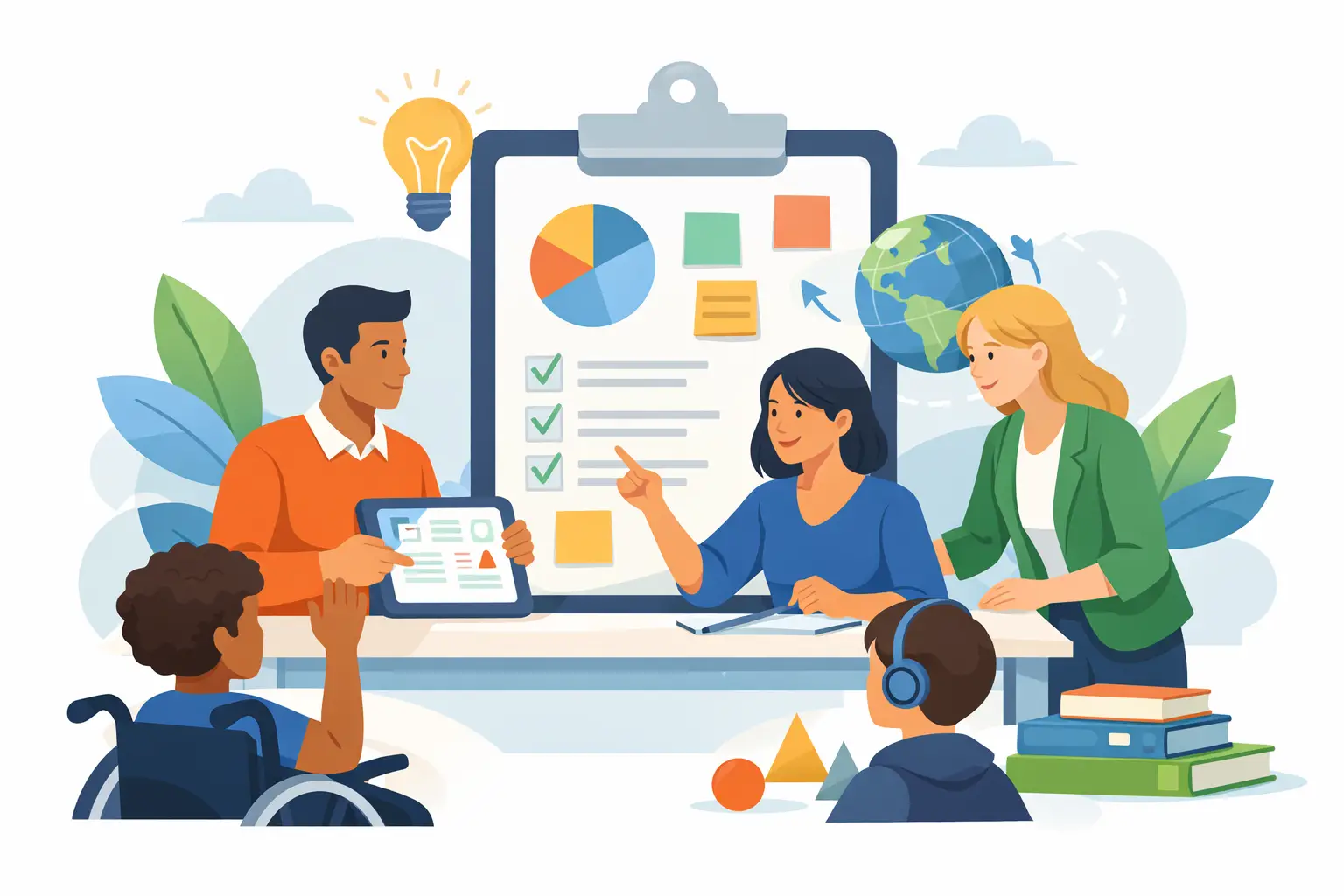
A student does not need to be separated from the class to need support. They may need extra processing time before speaking, a visual model before beginning, a quieter way to show understanding, or a predictable routine that makes participation feel safe. Inclusive lesson planning for teachers begins with this practical truth: meaningful access is built into instruction before a learner has to struggle for it.
This is not about creating a separate lesson plan for every student. It is about designing learning experiences with enough flexibility that more students can engage with the same essential learning goal. When educators plan this way, they reduce unnecessary barriers while preserving high expectations, belonging, and academic challenge.
What Inclusive Lesson Planning Looks Like
Inclusive planning starts by identifying what students truly need to learn. The learning objective should describe the knowledge, skill, or understanding at the center of the lesson, rather than one narrow way of completing a task.
For example, if the goal is for students to explain how evidence supports an argument, the objective is not “write a five-paragraph essay independently.” Writing may be one valuable option, but students might also explain their reasoning through a recorded response, a structured graphic organizer, or a teacher conference. The standard remains meaningful. The pathway becomes more accessible.
This distinction matters for students with learning differences, disabilities, language needs, anxiety, executive functioning challenges, or trauma-related stress responses. It also benefits students who may not have a formal identification but still need a different route into the learning.
Inclusive lesson planning asks teachers to consider three questions before instruction begins: What is essential for students to learn? What barriers might prevent them from accessing it? What supports can be available without lowering the learning goal?
Begin With Strengths, Not Assumptions
A strengths-based approach changes the quality of planning. Rather than beginning with what a student cannot yet do, consider the conditions in which they participate, communicate, persist, and demonstrate insight.
A student who avoids whole-group discussion may be an observant thinker who contributes more confidently after rehearsal. A learner who struggles with lengthy written directions may show strong understanding when instructions are modeled visually. A student who needs movement may sustain attention and retain information more effectively when participation includes active roles.
These observations are not reasons to reduce expectations. They are information that can help teachers create more responsive instruction. A plan that recognizes student strengths also communicates dignity. Learners are not problems to be managed. They are members of the classroom community with valuable perspectives and varying support needs.
Use learner profiles thoughtfully
Formal plans, assessment data, family insights, and student voice can all inform lesson design. However, profiles should guide curiosity, not create fixed assumptions. Two students with the same diagnosis may need very different supports. One may benefit from clear visual schedules, while another may find too many visual elements distracting.
Effective planning pairs knowledge of a learner with ongoing observation. Notice what happens during transitions, independent work, partner tasks, and assessment. Small patterns often reveal the adjustments that will make participation more achievable.
Plan Multiple Ways Into the Lesson
Many barriers appear at the start of a learning activity. If directions are delivered only verbally, a student who needs visual processing support may miss key steps. If background knowledge is assumed, students unfamiliar with the topic may disengage before the core learning begins.
Build access through clear, intentional entry points. Preview key vocabulary with visuals or examples. Share the purpose of the lesson in student-friendly language. Break multistep directions into manageable chunks, and model what successful work looks like before asking students to begin independently.
Choice can also increase access when it is purposeful. Students may choose whether to read a text silently, listen to it, or follow along while it is read aloud. They may work independently, with a partner, or in a supported small group when the task allows. These choices support autonomy, but choice should not become confusion. Offer a few meaningful options rather than an overwhelming menu.
For younger learners, a visual schedule, first-then language, and concrete materials can make expectations more understandable. For older students, planning templates, exemplars, and opportunities to preview content can strengthen organization and confidence. The right support depends on the age group, the task, and the individual learner.
Design Participation, Not Just Presence
Being physically present in the classroom is not the same as being included. Students need ways to contribute, respond, collaborate, and experience success alongside peers.
During discussion, plan more than one way for students to share thinking. A learner might speak, write a response, point to a visual choice, use a communication device, contribute through a partner, or submit an idea digitally. These options are especially valuable for students with communication differences, processing delays, or social anxiety.
Group work also benefits from deliberate structure. Assigning clear roles can reduce ambiguity and prevent one student from being left at the margins. Roles such as facilitator, recorder, evidence finder, timekeeper, or visual organizer give students a defined contribution while allowing teams to work toward a shared goal.
At the same time, avoid assigning roles that limit students based on assumptions about ability. A student who uses assistive technology can still lead a discussion. A learner receiving reading support can still be the group’s critical thinker. Inclusion is strengthened when every student is seen as capable of meaningful contribution.
Make Assessment Flexible and Useful
Assessment is often where hidden barriers become most visible. If every student must demonstrate learning in exactly the same format, the assessment may measure handwriting speed, language processing, sensory tolerance, or test anxiety as much as it measures understanding.
Flexible assessment does not mean lowering standards or making success easier. It means separating the skill being assessed from unrelated obstacles. If the objective is to identify the main idea, a student may show that understanding through an oral response, selected visuals, a digital organizer, or a brief written explanation, depending on the intended standard.
Plan checks for understanding throughout the lesson, not only at the end. Quick responses, thumb signals, annotation, partner explanations, and short conferences allow teachers to adjust instruction while learning is still underway. For students who hesitate to speak in front of peers, private or low-pressure response options can provide a more accurate picture of understanding.
When a student is not meeting the objective, ask whether the challenge is conceptual, instructional, environmental, or emotional. A missed response may signal a gap in knowledge, but it could also reflect unclear directions, sensory overload, a difficult transition, or fear of making a mistake. Responsive educators look beyond the answer to understand the conditions around it.
Build Predictability With Room for Responsiveness
Predictable routines support many learners, particularly students with executive functioning differences, anxiety, autism, attention needs, or trauma histories. Knowing how a lesson will begin, what materials are needed, and what comes next can reduce cognitive load and help students direct energy toward learning.
A consistent lesson structure may include a brief opening routine, an explicit model, guided practice, independent or collaborative application, and a closing check. Within that structure, teachers can offer varied materials, pacing, and response formats.
Still, planning should not become rigid. Some days, a class needs more modeling. Some students need a pause, a regulation strategy, or a smaller first step before they can rejoin instruction. Flexibility is not abandoning the plan. It is using professional judgment to keep the learning goal within reach.
Plan for regulation without singling students out
Classwide supports are often more respectful and effective than supports offered only after a student is visibly distressed. Brief movement breaks, access to quiet workspaces, visual timers, calm-down tools, and clear transition warnings can support the entire classroom.
When these supports are normalized, students are less likely to feel singled out for needing them. They also become more able to recognize and communicate what helps them learn.
Reflect, Collaborate, and Adjust
Inclusive planning improves through reflection. After a lesson, consider who participated easily, who needed repeated prompting, and who may have understood more than they were able to show. Look for patterns in the task design rather than placing the responsibility solely on the student.
Collaboration strengthens this process. Special educators, school counselors, related service providers, paraprofessionals, administrators, and families can offer perspectives that help classroom teachers make more informed decisions. Most importantly, students themselves can often describe what makes learning clearer, calmer, or more motivating.
Professional learning can help educators turn inclusive values into dependable classroom practice. The Sen Institute supports education professionals with research-based strategies that connect differentiated instruction, neurodiversity-affirming practice, trauma-informed support, and meaningful participation.
A well-planned inclusive lesson does more than help students complete an activity. It tells every learner, through the structure of the classroom itself, that their presence, effort, and voice belong there.