
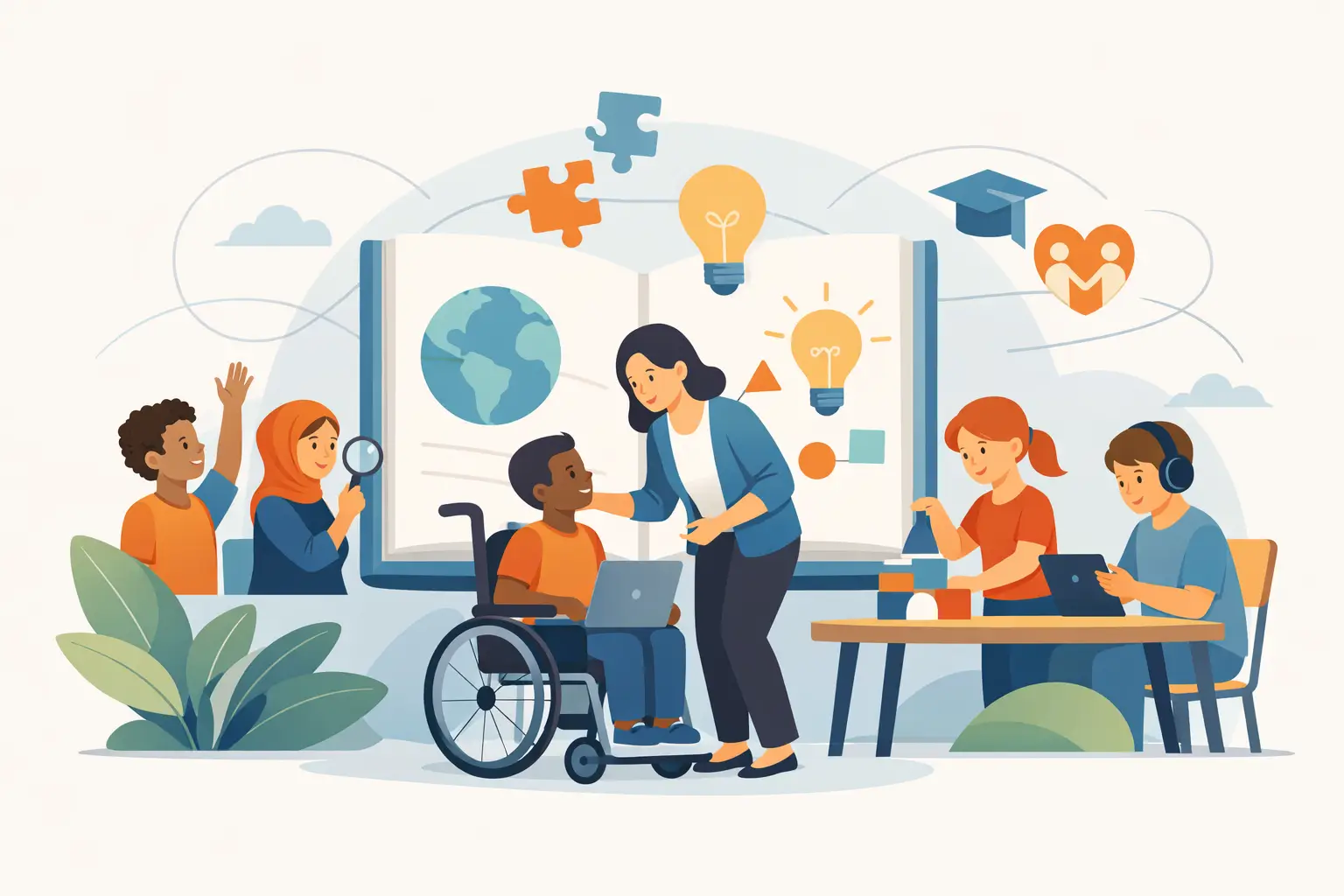
A student who avoids reading aloud may be protecting their confidence, not refusing to participate. A learner who needs to move may be regulating their attention, not being disruptive. Inclusive education strategies for diverse learners begin with this shift: behavior, communication, processing, and participation can look different without being less capable.
For educators, inclusion is not a separate program reserved for a few students. It is the daily work of designing learning environments where more students can access instruction, demonstrate understanding, build relationships, and experience dignity. Individualized support still matters, especially when a student has an identified disability or a formal plan. Yet the strongest classrooms reduce unnecessary barriers before a learner has to ask for help.
Start With Strengths, Needs, and Learner Voice
Effective support begins with curiosity. Rather than asking, “What can this student not do?” ask what conditions help them engage, communicate, and persist. A student may have strong visual reasoning but need support with verbal directions. Another may contribute sophisticated ideas in discussion but find timed writing difficult. These patterns point toward practical instructional decisions, not lower expectations.
Gather information from several sources: student work, classroom observation, families, previous educators, specialists, and the learners themselves. Student voice is especially valuable. Even young learners can often explain what makes a task feel manageable, what helps them calm down, or how they prefer to show their knowledge.
This does not mean placing the responsibility for access on the student. It means treating them as a knowledgeable partner in their own education. When educators listen carefully, accommodations are more likely to be useful rather than generic.
Design Access Before the Lesson Begins
Universal Design for Learning offers a practical framework for planning flexible instruction from the outset. It encourages educators to provide multiple ways for students to engage with content, receive information, and express what they know. The goal is not to create a different lesson for every student. It is to build meaningful choices into a shared learning experience.
For example, a science lesson can include a brief teacher explanation, labeled visuals, a hands-on model, and key vocabulary available in plain language. Students might demonstrate understanding through a written response, an oral explanation, a diagram, or a recorded presentation. The learning goal remains clear, while the route to that goal becomes more accessible.
Choice is most effective when it is purposeful. Too many options can overwhelm a learner who needs predictability or support with executive functioning. Offer a small number of equally rigorous choices, explain each one clearly, and provide a recommended starting point when needed.
Make Directions Visible and Manageable
Many students benefit when verbal instructions are also available in writing, visuals, or modeled examples. Break multistep tasks into short, numbered actions. Show what a finished product might look like, then check for understanding before independent work begins.
A question such as “What is your first step?” is often more informative than “Do you understand?” It gives students a low-pressure way to identify confusion and gives educators a chance to reteach early.
Build Predictable Routines Without Making Learning Rigid
Predictability supports learners who experience anxiety, attention differences, processing challenges, trauma-related stress, or difficulty with transitions. A visible agenda, consistent opening routine, advance notice of changes, and a clear process for asking for help can reduce cognitive load for the entire class.
At the same time, structure should not become inflexibility. Some students need movement, sensory breaks, extra processing time, or a quieter location to complete a task. A well-designed routine includes these supports as ordinary classroom options rather than exceptions that draw attention to a learner.
Consider a calm, clearly taught reset process. A student might use a designated seat, a brief movement break, noise-reducing tools, or a visual regulation menu before returning to learning. The purpose is not removal from the classroom community. It is supporting regulation so participation can continue.
Use Inclusive Education Strategies for Diverse Learners During Instruction
Differentiation works best when it is connected to a specific barrier. If a learner struggles to decode a dense text, audio support and vocabulary preview may improve access. If the barrier is organizing ideas, a graphic organizer, sentence starter, or teacher conference may be more appropriate. Matching support to the barrier protects both learning time and student independence.
Scaffolds should be adjusted as competence grows. Keeping a support in place indefinitely can unintentionally communicate low expectations. Removing it too soon can create frustration. Review supports regularly with the student and team: Is this helping? Is it still needed? What would greater independence look like?
Flexible grouping is another useful approach. Group students according to the purpose of the activity, not fixed assumptions about ability. At different points, learners may benefit from peer discussion, targeted instruction, independent practice, or a teacher-led small group. Avoid groups with labels that students quickly learn to associate with being “behind.”
Peer collaboration also needs structure. Assign meaningful roles, model respectful communication, and ensure every student has a way to contribute. Inclusion is not achieved when a learner is physically present but consistently sidelined in group work.
Assess Learning, Not Speed or Compliance
Assessment can either reveal understanding or measure a student’s ability to cope with barriers unrelated to the learning objective. If the goal is to assess historical reasoning, a timed handwritten essay may not be the only valid method. An oral response, supported outline, speech-to-text draft, or extended time may offer a more accurate picture of learning.
This does not mean every assessment must change. It means educators should distinguish essential requirements from traditional habits. Ask what the student must truly demonstrate and which conditions allow that demonstration to be valid.
Frequent low-stakes checks are particularly valuable. Exit tickets, brief conferences, response cards, annotated examples, and student self-assessments help educators identify misunderstandings before they become patterns of failure. They also allow students to receive feedback as part of learning rather than as a final judgment.
Respond to Behavior With Skill, Safety, and Connection
Behavior is communication, but it is not always easy communication to interpret. A student who shuts down, argues, leaves their seat, or refuses work may be signaling overwhelm, an unmet academic need, a social concern, or a difficulty with regulation. A compassionate response does not ignore expectations. It investigates what support makes success more likely.
Begin with prevention: teach routines explicitly, maintain clear and attainable expectations, recognize effort specifically, and create opportunities for students to repair mistakes. When a concern occurs, respond privately when possible and use calm, concrete language. Public correction can intensify shame and escalation, particularly for learners with prior negative school experiences.
Trauma-informed practice is not about assuming every child has experienced trauma. It is about creating environments that are emotionally safer, predictable, respectful, and responsive. Consistent relationships are central to this work. Students are more likely to take academic risks when they believe adults will interpret difficulty with care rather than punishment.
Collaborate Beyond the Classroom
Inclusive practice is stronger when educators do not work in isolation. Classroom teachers, learning-support staff, counselors, specialists, school leaders, and families each hold part of the picture. Collaboration becomes practical when teams discuss observable needs, successful strategies, responsibilities, and a realistic way to monitor progress.
Family partnership should be approached with respect for culture, expertise, and circumstance. Families may have valuable insight into a student’s interests, communication, routines, and stressors. At the same time, not every family has equal availability, comfort with school systems, or access to resources. Offer multiple ways to communicate and avoid treating limited participation as lack of care.
For schools, professional learning matters most when it leads to shared practice. Teams need time to examine classroom barriers, rehearse strategies, review student outcomes, and refine their approach. Programs such as those offered by The Sen Institute can help education professionals connect research-based principles with the decisions they make each day.
Create a Culture Where Support Is Normal
Students notice how adults talk about difference. When accommodations are described as tools rather than advantages, and when varied ways of learning are expected, students are less likely to feel singled out. Model this language consistently: everyone uses strategies; different learners need different supports; high expectations and meaningful access belong together.
The most lasting change may begin with one question before the next lesson: “Who might face a barrier here, and what can I adjust without lowering the goal?” That question invites practical action, protects student dignity, and keeps the classroom moving toward fuller participation for every learner.



1 Comment
[…] an irrelevant barrier. However, repeated reduction without a clear purpose can limit access to grade-level ideas and send the message that a student is not capable. Whenever possible, maintain cognitive challenge […]