A student who shuts down during writing time, avoids group work, or struggles to follow a multistep direction does not need to be reduced to a label. They need educators who can recognize barriers, respond with skill, and create meaningful ways to participate. Accredited special education courses online can help educators build that capacity without stepping away from the classrooms, teams, and families they already serve.
For teachers, paraprofessionals, learning-support staff, and aspiring school counselors, the right course is more than a credential to add to a resume. It is a structured opportunity to develop practical strategies for supporting neurodivergent learners and students with academic, social-emotional, behavioral, or trauma-related needs. The distinction matters: inclusive practice becomes meaningful when it changes what happens on Monday morning.
What accreditation should mean for your professional growth
Accreditation signals that a program has been reviewed against defined educational standards. It can offer reassurance that the course has a sound structure, qualified instruction, clear learning outcomes, and credible assessment. For professionals seeking a specialized role or a stronger foundation in inclusive education, that external recognition can make training more valuable to employers and school leaders.
Still, accreditation is not a single, universal promise. Requirements differ by state, district, country, and job title. A course may be accredited and professionally valuable without automatically qualifying a participant for state teacher licensure, special education endorsement, or a regulated counseling credential. Before enrolling, identify the outcome you need: stronger classroom practice, continuing education, advancement within your current role, preparation for a future pathway, or a recognized specialist certification.
Ask the provider what kind of accreditation or credentialing applies, who recognizes it, and what completion means in practical terms. A trustworthy program is clear about these details. It does not blur the line between professional development and licensure.
Why online learning fits the reality of school-based work
Education professionals are rarely short on motivation. They are short on uninterrupted time. Between planning, documentation, meetings, family communication, and the daily work of responding to students, a fixed weekly schedule can make further study feel out of reach.
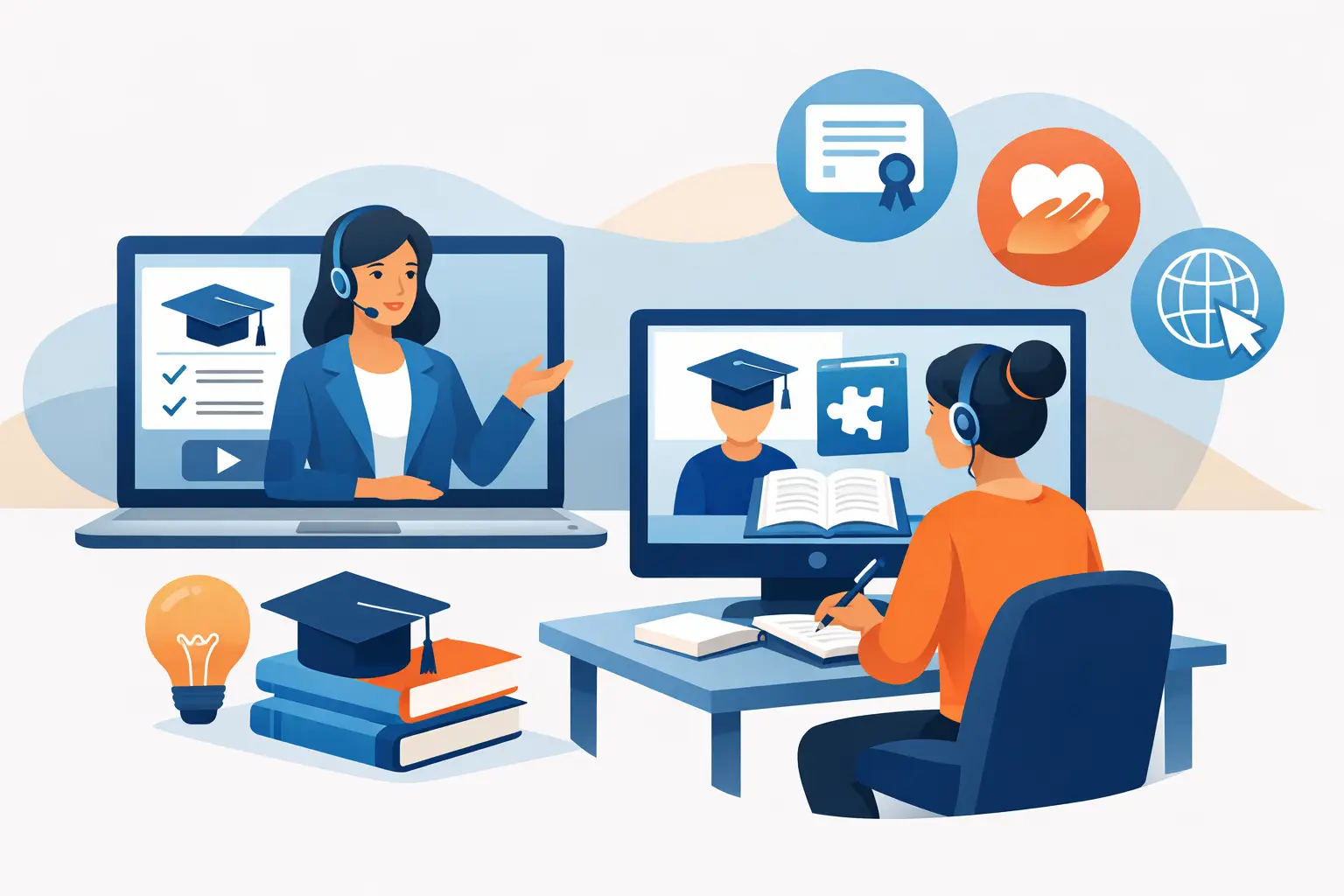
A well-designed online course gives learners flexibility while maintaining purpose. Self-paced modules allow a teacher to revisit material after a challenging day, while structured assignments connect learning to real situations. The strongest online programs do not simply transfer slide decks to a screen. They help participants practice how to adapt instruction, observe patterns, communicate with families, and make support plans that respect student dignity.
Flexibility does involve responsibility. Self-paced learning works best for professionals who can set a regular study rhythm and protect time for reflection. If you learn best through live discussion, look for a program that includes expert guidance, mentorship, feedback, or opportunities to engage with other educators. The right format depends on your workload and how you learn, not on a one-size-fits-all definition of convenience.
What to look for in accredited special education courses online
Course titles can sound similar while offering very different experiences. A meaningful program should move beyond broad awareness of disability or inclusion and help you make better decisions in the moment. Review the curriculum closely. Does it explain why a strategy works, when it may not work, and how to adjust it for an individual learner?
Look for instruction grounded in research-based inclusive practices, with direct connections to classroom and school settings. Useful content often includes differentiated lesson design, strengths-based assessment, behavior support, executive functioning, communication, social-emotional learning, trauma-informed approaches, and collaboration with families and multidisciplinary teams.
Equally important is the expertise behind the course. Experienced special educators bring perspective that cannot be captured by definitions alone. They can help participants think through the tension between meeting curriculum expectations and responding to a learner’s individual needs. They can also model language that is both professional and affirming when discussing disability, learning differences, and support requirements.
Before choosing a program, consider these four questions:
- Does the curriculum lead to skills I can apply in my current or next role?
- Is the credential accredited or recognized in a way that matches my goals?
- Will I receive feedback, guidance, or mentorship from knowledgeable professionals?
- Does the program approach learners through strengths, access, and participation rather than deficits?
These questions can prevent a common disappointment: completing a course that feels informative but does not change professional practice.
Turn course learning into better support for students
The value of specialized training is not measured only by completed modules. It shows up in the choices educators make with students. A teacher may learn to offer multiple ways for students to show understanding rather than relying on one written response. A support professional may recognize that a student’s apparent noncompliance is connected to sensory overload, unclear expectations, anxiety, or a task that exceeds current access needs.
This does not mean every challenge has a quick solution. Individualized support requires observation, collaboration, and adjustment. A visual schedule may support one learner and feel unnecessary to another. Small-group instruction can be effective, but only when the group has a clear purpose and does not limit access to rich grade-level learning. The goal is responsive practice, not a collection of strategies applied without context.
Strong training also builds advocacy skills. Educators need confidence to participate in conversations about accommodations, support plans, classroom access, and student voice. They need to know how to bring observations to a team without making assumptions, and how to partner with families as experts in their children’s experiences.
For aspiring counselors and learning-support professionals, this preparation can deepen their ability to support students across academic, behavioral, and social-emotional domains. For classroom teachers, it can transform inclusion from an aspiration into a set of thoughtful daily actions.
Build a credential that reflects your values
Professional development is often framed as a career move, and it can be one. Specialized preparation may strengthen your readiness for learning-support roles, team leadership, school consultation, or further study. It can also help you speak with greater clarity about the contribution you bring to an inclusive school community.
Yet the most meaningful reason to pursue this work is often more personal. Many educators remember a learner they wanted to support more effectively but did not yet have the tools to reach. That feeling can become a turning point. Training offers a way to replace uncertainty with practical knowledge and a stronger sense of professional agency.
The Sen Institute’s accredited SEN Specialist Certification, for example, is designed around flexible learning, experienced guidance, and immediately applicable inclusive strategies. Programs with this kind of focus can help professionals connect research to the decisions they make with students, families, and colleagues every day.
Choose the next step with care
As you compare accredited special education courses online, resist the pressure to select the fastest option simply because it promises a certificate. Read the learning outcomes. Consider the quality of the support. Confirm what the credential represents in your professional context. Most of all, choose training that treats diverse learners as capable people with strengths, preferences, and a right to belong.
The course you choose should leave you better prepared to notice what a student needs, collaborate with the people around them, and create more than access. It should help you create genuine participation.